A fleet-wide configuration change is a peculiar product action. The button may be one click; the consequences can arrive on ten thousand laptops.
Applivery added a useful wrinkle to endpoint management on September 11: its new Intelligence layer can simulate the likely impact of a proposed change before an administrator applies it. The release also includes approval controls and a dial for how much autonomy the system gets. Those details matter more to me than the AI label. That changes the product requirement in a useful way.
I’ve spent enough time around test systems and connected hardware to be suspicious of controls whose blast radius is much larger than their interface suggests. A toggle looks harmless until that policy gets pushed to every endpoint, where the interface’s tiny switch suddenly acquires a very large footprint.
Put blast radius in the interface
Product teams usually treat rollout risk as an implementation concern, then hand administrators documentation describing how to be careful. The safer product makes scope visible before execution: which devices are affected, what dependencies change, what conflicts are predicted, and how difficult reversal will be.
This is basically a preflight check for software operations; pilots don’t inspect an airplane because they expect a wing to fall off; they inspect it because cheap checks belong before expensive motion.
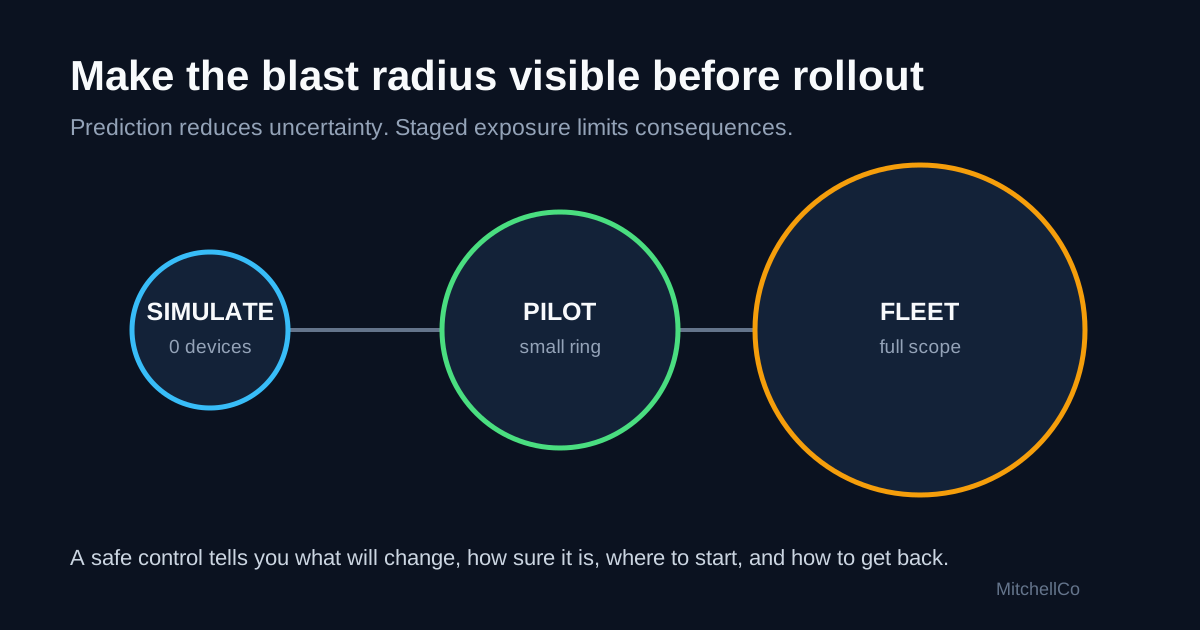
Applivery already documents progressive deployment using tags and publications, with a build moving from a pilot group toward production as confidence increases. Impact simulation adds another layer before that first ring. Small scope buys evidence before confidence gets expensive. Prediction and staged exposure solve different problems: one asks what might break, while the other limits how much can break before humans learn something.
At home, my two elementary-school kids have independently discovered a similar deployment strategy: test a questionable idea on one parent first, then expand only after observing the response. Their change-management board has poor documentation, but excellent instincts about blast radius.
Make reversibility a product property
For a product manager, I’d put four things beside any high-consequence action: predicted scope, confidence in that prediction, the smallest useful rollout group, and a rollback path. The exact UI varies, but those properties should survive whether the action changes an OS policy, ships firmware, rotates credentials, or updates an application.
There is a failure mode here because simulation can create false confidence when the model lacks an odd device state, stale inventory, a dependency, or some wonderfully cursed exception hiding on a laptop in accounting. Prediction should inform the rollout boundary, not erase it.
That’s why progressive deployment still matters after impact simulation arrives, and Applivery’s documentation explicitly builds deployment rings from tags rather than a dedicated ring feature, which is slightly plumbing-shaped but also transparent: administrators can see how promotion works.
The product lesson travels beyond endpoint management: whenever one control can alter a large population, blast radius belongs in the product surface alongside the action itself.
A fleet-wide button shouldn’t merely ask, “Are you sure?” It should tell you what “you” and “sure” are about to touch.
Comments
Comments are powered by GitHub Discussions through Giscus.